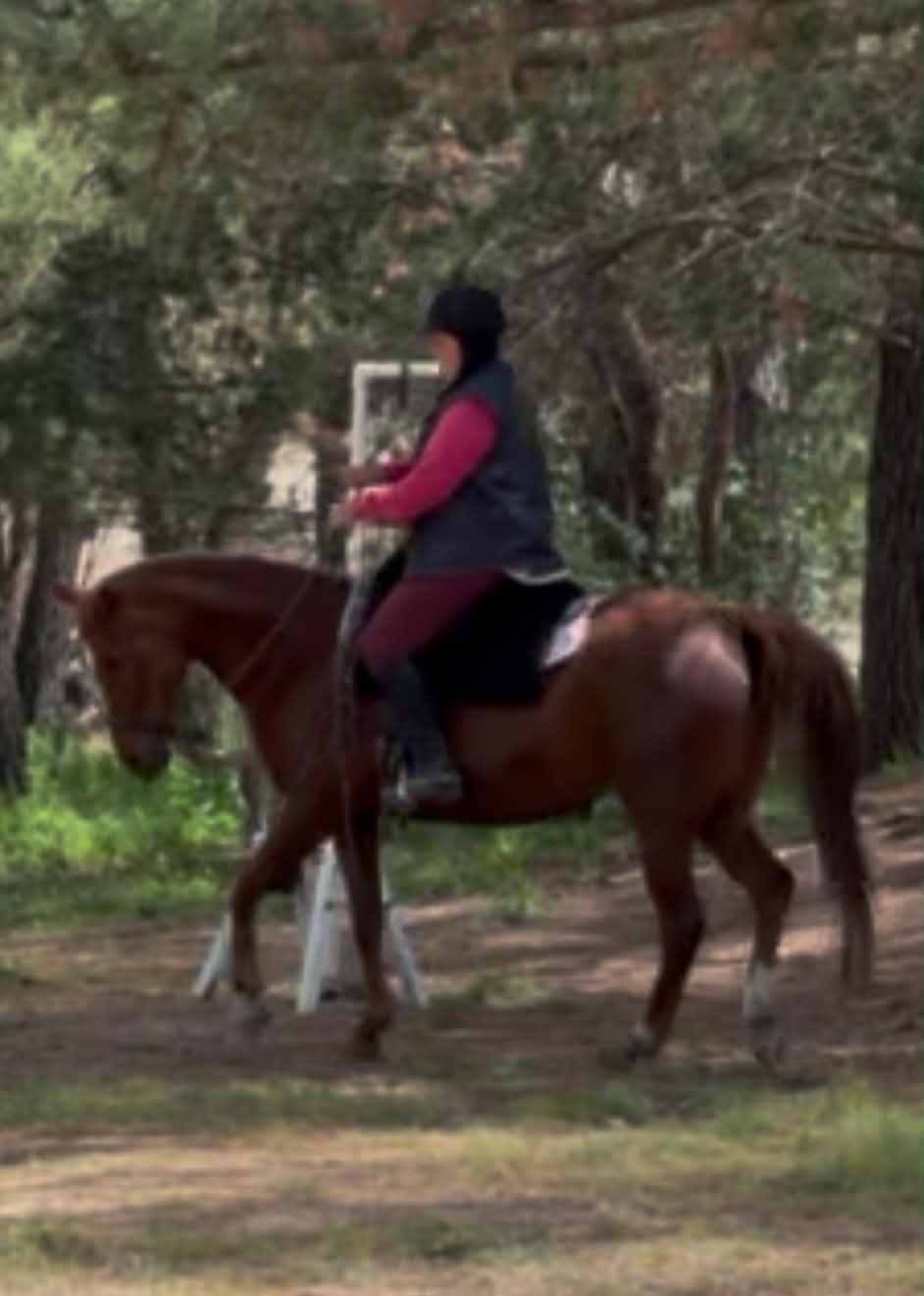
Horse and rider working through a Working Equitation obstacle course

Working Equitation · South Australia

Four phases. One true partnership.

Working Equitation brings dressage, practical obstacles, speed and cattle work together in one complete test of trust, balance, responsiveness and horsemanship.

Educational guide based on the Australian National Working Equitation 2026 Official Rule Book. Official rules always take precedence.

What is Working Equitation?

Classical training made practical

The discipline grew from the riding traditions used to work farms and cattle in Portugal, Spain, France and Italy. Today it is an international sport, open to every breed and riding background.

The aim is not simply to get through an obstacle. The horse should remain attentive, balanced and confident while the rider uses clear, economical aids. Correct training, horse welfare and a willing partnership sit at the centre of every phase.

Australia's national rules are administered by Australian National Working Equitation Limited (ANWE/ANWEL), the Australian body affiliated with the World Association for Working Equitation.

Harmony before hurry

Rhythm, balance, relaxation and willing responses matter more than force.

Useful skills

Gates, bridges, narrow corridors, poles and cattle reflect the challenges of a real working horse.

A clear pathway

Eight Australian levels allow horse and rider to progress from walk and trot through to collected, one-handed work.

Every breed is welcome

Working Equitation rewards training and partnership — not a particular type of horse, tack or riding tradition.

4

Competition phases

22

Official obstacle types

8

Australian levels

20 × 40

Dressage arena (metres)

The complete sport

The four phases

Dressage, Ease of Handling and Speed are the three compulsory competition phases for eligible levels. Cattle is the optional fourth phase. Level 1 competes in Dressage and Ease of Handling only.

Phase 1

Dressage

A prescribed test in a 20 × 40 metre arena demonstrates the foundation beneath everything else: rhythm, relaxation, suppleness, connection, impulsion, straightness and the degree of collection appropriate to the level.

  • Tests progress from walk and trot at Level 1 to lateral work, counter canter, flying changes and one-handed riding.
  • Movements and collective marks are scored from 0 to 10; half-marks may be used.
  • A caller is permitted under Australian rules, with a five-point deduction.

Phase 2

Ease of Handling

Horse and rider negotiate a numbered course of practical obstacles. Each task is judged for correctness, calmness, balance, rhythm, transitions, precision and the quality of the partnership — not merely completion.

  • Recommended course size rises from 8–10 obstacles at Introductory to 14–16 at Consagrados and Masters.
  • Riders walk the course unmounted before competing.
  • Red markers stay on the rider's right; white markers stay on the left.

Phase 3

Speed

A timed course uses permitted Ease of Handling obstacles, but the winner is determined by the fastest adjusted time. The goal is efficient, athletic riding under control — not reckless speed.

  • Offered from Level 2 upward; there is no Speed phase at Level 1.
  • Many faults add five seconds. Successful garrocha ring or ball tasks can deduct ten seconds each when correctly completed.
  • The jug is never used in Speed; some technical obstacles are excluded at lower levels.

Optional Phase 4

Cattle

This timed team phase tests whether the horse and rider can calmly separate an assigned beast from the herd and move it into the completion zone while teammates contain the remaining cattle.

  • Open to Levels 2–8, usually in teams of four.
  • The individual rider has three minutes from entering the containment zone.
  • Cattle welfare, safe footing, suitable fencing and experienced supervision are mandatory priorities.

Competition essentials

How the obstacle phases work

Every course is different, but the rules of navigation and completion are consistent. These are the points new competitors most often need to understand.

1

Ride the published order

The course map, obstacle numbers, direction markers and any level-specific directives determine the route and required gaits.

2

Red right, white left

Pass directional markers with red on the horse's right and white on the left. Paired markers define an entrance, exit or transition line.

3

Complete the whole task

Where markers are used, the combination must enter correctly, perform the technical movement and leave through the exit markers.

4

Protect live obstacles

An obstacle not yet completed is "live". Starting out of order, crossing or knocking down a live obstacle can eliminate the combination.

5

Correct before moving on

A wrong pattern may be restarted and corrected before the next obstacle begins. Once the next obstacle is started, an uncorrected error means elimination.

6

Know refusal limits

At most levels, the third refusal at one obstacle or a resistance lasting 15 seconds results in elimination. Limited "pass" provisions may apply to Levels 1–2 at club events.

7

Transitions count

When markers specify a gait change, the downward transition is completed before the nose crosses the entrance line; the upward transition begins after the tail clears the exit line.

8

Use the right hand

Obstacle actions are performed with the right hand. Changing working hands during the course is not permitted under the Australian rulebook.

9

Salute and wait

Riders salute at the beginning and end of each phase and do not cross the start line until the judge signals. Gear check is required for every phase.

Scoring at a glance

How the result is calculated

Dressage

Each movement and collective area is marked from 0 to 10, with half-marks allowed. The total is converted to a percentage.

Ease of Handling

Each obstacle plus collective qualities is marked from 0 to 10 and converted to a percentage. A zero has level-dependent elimination consequences.

Speed & Cattle

These are ranked by adjusted time. Speed faults commonly add five seconds; a correctly completed ring or ball can deduct ten. Cattle faults generally add time.

Overall champion

Placing points from the three compulsory phases are added. A tie for individual champion is decided by the higher Dressage score.

Official Australian obstacle library

All 22 obstacle types

The 22 official obstacle types test a wide range of practical skills. Each rewards calmness, precision and a willing partnership between horse and rider.

Gate

Open, pass through and close a gate without dismounting. Tests one-handed riding, horse responsiveness and the ability to work alongside a fixed object at any gait.

Bridge

Walk calmly over a raised wooden bridge. Builds confidence in unfamiliar footing and tests the horse's trust in the rider's guidance.

Water

Enter and move through a water obstacle. A classic confidence-builder that rewards a horse that accepts the unknown without hesitation.

Coming soon to Harmony N Horsemanship clinics

Slalom

Navigate a series of markers or barrels with precision, demonstrating lateral suppleness and accurate rider aids at the required gait.

Reinback through poles

Back the horse through a defined corridor, requiring softness, straightness and clear communication between horse and rider.

Side pass

Move the horse laterally along a pole or rail without forward or backward movement. Tests the horse's response to leg aids and the rider's balance.

Bell corridor

Ride through a narrow corridor and ring a bell at the end. Tests straightness, control and the horse's acceptance of an unusual task.

Jug

Pick up a jug from a post, carry it to a second post and place it down — all without dismounting. Tests one-handed riding and horse steadiness.

Pick up and deposit

Retrieve an object from one location and place it at another. Rewards a calm, obedient horse and a rider with independent hands.

Bull ring

Carry a garrocha (pole) and place a ring over a post, or use the pole to move a ball into a target. A traditional Iberian skill requiring balance and precision.

Stock pen

Guide the horse into a small enclosure, turn and exit. Tests the horse's willingness to enter a confined space calmly and back out on request.

Jump

Clear a small jump as part of the course. Rewards a forward, balanced horse and a secure, independent rider position.

Barrels

Ride a figure-eight or prescribed pattern around barrels. Tests bend, balance and the accuracy of the rider's line.

Corridor of poles

Ride through a narrow lane of poles on the ground. Tests straightness and the horse's acceptance of objects close to its feet.

Garrocha

Carry a long garrocha pole throughout a section of the course. Tests balance, one-handed riding and the horse's acceptance of an unusual object.

Ditch

Cross a shallow ditch or ground-level obstacle. Rewards a forward, confident horse that trusts the rider's leg.

Curtain

Ride through hanging strips or a curtain obstacle. Tests the horse's acceptance of contact and unusual sensory input.

Drum

Ride around or between drums as directed. Tests accuracy and the horse's response to precise directional aids.

Reinback over pole

Back the horse over a single pole on the ground. Requires feel, timing and a horse that responds softly to the rein.

Cattle sorting

At advanced levels, separate a nominated beast from the herd and move it to the completion zone. The ultimate test of partnership, feel and horsemanship.

Immobility

Halt the horse and remain motionless for a set period. Tests the horse's acceptance of stillness and the rider's ability to sit quietly.

Sombrero

Pick up a hat from a post and place it on the rider's head, or reverse the task. A traditional Iberian element rewarding balance and one-handed dexterity.
Australian competition pathway

Eight progressive levels

The horse is graded by level. Requirements build progressively from two-handed walk and trot through to collected, one-handed work with flying changes.

LevelNameCore expectationEOH gaitsHorse ageObstacles
1IntroductoryInviting entry level; two hands; walk and trot. Assisted riders may be approved at club level.Trot with walk transitions. More than three consecutive canter strides eliminates.3+8–10
2PreparatoryWalk, trot and a developing amount of canter; two hands. Designed for horses not ready to canter a full course.Trot with specified canter lines or obstacles; progressive changes permitted.4+10–12
3PreliminaryFull-course canter introduced while correct basics and elasticity remain the priority.Canter with changes through walk or trot; progressive transitions allowed.4+10–12
4Debutante WMore engagement and uphill balance; lateral work, counter canter and walk-through changes.Canter with changes through walk.4+12–14
5Debutante FGreater collection and ready response to the aids; flying changes introduced.Canter with flying changes; walk transitions where required.5+12–14
6Consagrados 2Advanced two-handed work with a greater degree of engagement and collection.Canter with flying changes; walk transitions where required.6+14–16
7Consagrados 1WAWE International level; consistent balance and one-handed riding with reins in the left hand.Canter with flying changes; walk transitions where required.6+14–16
8MastersHighest Australian level; one-handed performance showing softness, collection and confirmed training.Canter with flying changes; walk transitions where required.6+14–16

Age divisions are separate from horse level.Age divisions are separate from horse level. Australian divisions are Child (under 12), Junior (12 to under 16), Youth (16 to under 21) and Open.

View official ANWE tests

Safety, tack & welfare

Rules that protect horse and rider

Gear check every phase

The rider presents mounted in legal, correctly fitted tack and the declared riding tradition. Current helmet standards apply; riders under 18 must wear an approved fastened helmet whenever mounted.

No harsh shortcuts

Inhumane treatment, excessive force, fresh blood or prohibited medication can eliminate the combination from the entire competition. Judges may stop unsafe or uncontrolled riding.

Falls and lameness

A fall of horse or rider, or evidence of lameness, eliminates that combination from the current phase and all later phases. Earlier results remain.

Outside help is restricted

Outside assistance is not allowed except approved Level 1 support. Test callers are permitted but attract a deduction or time penalty.

One partnership

A horse competes at one level with one nominated rider at the event. The same combination carries through the phases.

Check the full tack list

Martingales, running reins, tongue ties, blinkers and several other training aids are prohibited on competition grounds. Always consult the current rulebook before competing.

Training with Harmony N Horsemanship

Build your partnership from the ground up

Christina brings years of Working Equitation experience to every lesson and clinic. Whether you are picking up a garrocha for the first time or preparing for your first competition, training is tailored to you and your horse.

  • Open to all levels — first-timers through to experienced competitors
  • Small group sizes for personalised, quality instruction
  • Introduction to all WE obstacle types
  • Dressage coaching integrated with obstacle work
  • Confidence-building exercises for horse and rider
  • Guidance on competition preparation and pathways
  • Held across the Adelaide Hills and Barossa region
  • Enquire to be added to the clinic notification list
"Whatever you do, work at it with all your heart, as working for the Lord." — Colossians 3:23

Common questions

FAQ

Ready to explore Working Equitation?

Whether you want to understand the sport, prepare for your first competition or simply add variety and purpose to your training, get in touch.